Paysagiste, formateur et consultant, spécialiste des jardins japonais
OK
Compte
Accueil
0
Votre panier
0,00 EUR
Les outils japonais de taille
Les outils de taille
Les sécateurs et ciseaux de jardiniers japonais
Les scies japonaises
Les cisailles japonaises
Kama, les faucilles japonaises
Les couteaux japonais pour le jardin
L'entretien
L'affûtage et l'entretien de vos lames
Les étuis et sacs à outils japonais
Le coin du SAV
Les échelles tripodes japonaises
Les échelles tripodes à la norme européenne, les plus robustes
Les échelles tripodes japonaises d'origine, les plus légères
Articles complémentaires à votre tripode
HORI HORI
Nos autres outils japonais
Les outils pour le bambou
Les outils pour la confection des palissades
Les outils pour le désherbage et le travail du sol
Les outils pour le travail de la pierre et la maçonnerie
Les outils pour l'ikebana et l'arrangement floral
Les nouveautés
Sécateur japonais ONOYOSHI AK-200-2
Sécateur ONOYOSHI B-180-2
Sécateur ONOYOSHI B-200-2
Sécateur Onoyoshi BZ-210-2
Boutique
Tous les articles
>
Japanese tools for weeding and tillage
Rechercher
Votre Panier
Japanese tools for weeding and tillage
Japanese tools for manual weeding and soil cultivation
Designed for
manual weeding and surface soil work,
Japanese gardening tools are renowned for their
precision, efficiency and durability
.
At Niwashi, our selection brings together
traditional, ergonomically designed tools
that allow you to loosen the soil,
control unwanted plants
and
maintain a healthy soil structure
, season after season.
What is manual weeding in the garden?
Manual weeding consists in
controlling unwanted plants
that may compete with cultivated plants for water, nutrients and light. This practice plays a key role in the
overall health of plantings
, the
preservation of soil structure
and the
visual balance of the garden
.
By favouring a
gentle and targeted mechanical action
, manual weeding makes it possible to
avoid the use of pesticides and chemical weed killers
, which can damage
soil life
and disrupt the biological balance of the garden. Working by hand, at the right time and with appropriate tools, helps limit regrowth over time while respecting micro-organisms, neighbouring roots and biodiversity.
This approach relies on the use of
specific hand tools
— hoes, sickles, hand weeders or fine blades — selected according to soil type and the level of precision required. It is particularly well suited to
flower beds, containers, vegetable gardens, borders
and sensitive areas, where careful and controlled action is essential.
At
Niwashi
, we select
Japanese weeding tools
designed to combine
efficiency, durability and respect for the soil
. Forged from
high-quality steels
and shaped for accurate hand movements, these tools also allow light surface soil work, improving aeration without disturbing the soil, and fully support a
chemical-free gardening approach
.
Japanese tools for manual weeding and soil care
Discover a selection of
Japanese market-garden and gardening tools
designed for
manual weeding and precise surface soil work
. Shaped to support accurate hand movements, these tools allow effective intervention while preserving soil structure and soil life.
Japanese spade
Ergonomic and highly durable, Japanese spades are characterised by their German-style handles, which encourage
close-to-the-body work
and
improved power transfer
. The models selected by
Niwashi
come from the renowned
Tombo
brand and are available in two formats —
mini (65 cm)
and
maxi (97 cm)
— to suit a wide range of gardening tasks.
Japanese hoe
Versatile by nature, the
Japanese hoe (Kuwa)
is well suited for
transplanting, surface scraping, soil loosening, setting young plants
and
cutting superficial roots
or
bamboo rhizomes
. Depending on the model, it can also be used as a
dibber, gouge
or surface soil tool. Niwashi offers several designs, each developed for a specific use.
Japanese sickle (Kama)
An emblematic tool for manual weeding, the
Japanese sickle
— or
Kama
— stands out for its sharp, precise cutting edge, efficiency and versatility. As a
pioneer of Japanese sickles in Europe
, Niwashi offers
the widest range on the European market
, covering a broad spectrum of blade shapes, hardness levels and gardening applications.
Among these models, the
Nejiri kama
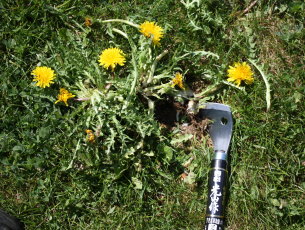
holds a special place. Specifically designed for
surface weeding
, it allows
extremely precise work
, efficiently cutting unwanted plants roots
without turning the soil
. Its
ergonomic shape
and
angled blade
make it an
essential tool for maintaining flower beds, paths and vegetable gardens.
Selected for their steel quality, durability and working comfort, Niwashi’s Japanese kamas fully support a
manual, soil-respectful and chemical-free gardening approach
.
Hori Hori
A truly versatile
garden knife
, the
Hori Hori
is a highly effective
Japanese weeding tool
. Its blade features two cutting edges — smooth on one side, serrated on the other — enabling
weeding, cutting roots, bulbs and rhizomes, pot removal, soil loosening
and work in compact soils. The slightly concave blade also makes it easy to handle small quantities of soil or substrate. Two versions are available:
stainless steel
or
carbon steel
.
These Japanese tools for weeding and soil care are intended for
demanding gardeners and professionals
seeking a
manual, durable and chemical-free gardening practice
, in line with the spirit of Japanese gardens.
Designed to support precise hand movements and long-term use, the Japanese tools presented below are intended for gardeners who wish to weed and work the soil manually, without chemical inputs.
Each product page provides detailed information on recommended uses, blade characteristics and selection guidance, helping you choose the tool best suited to your garden and working practices.